Chopstick
筷,2025
作品介绍
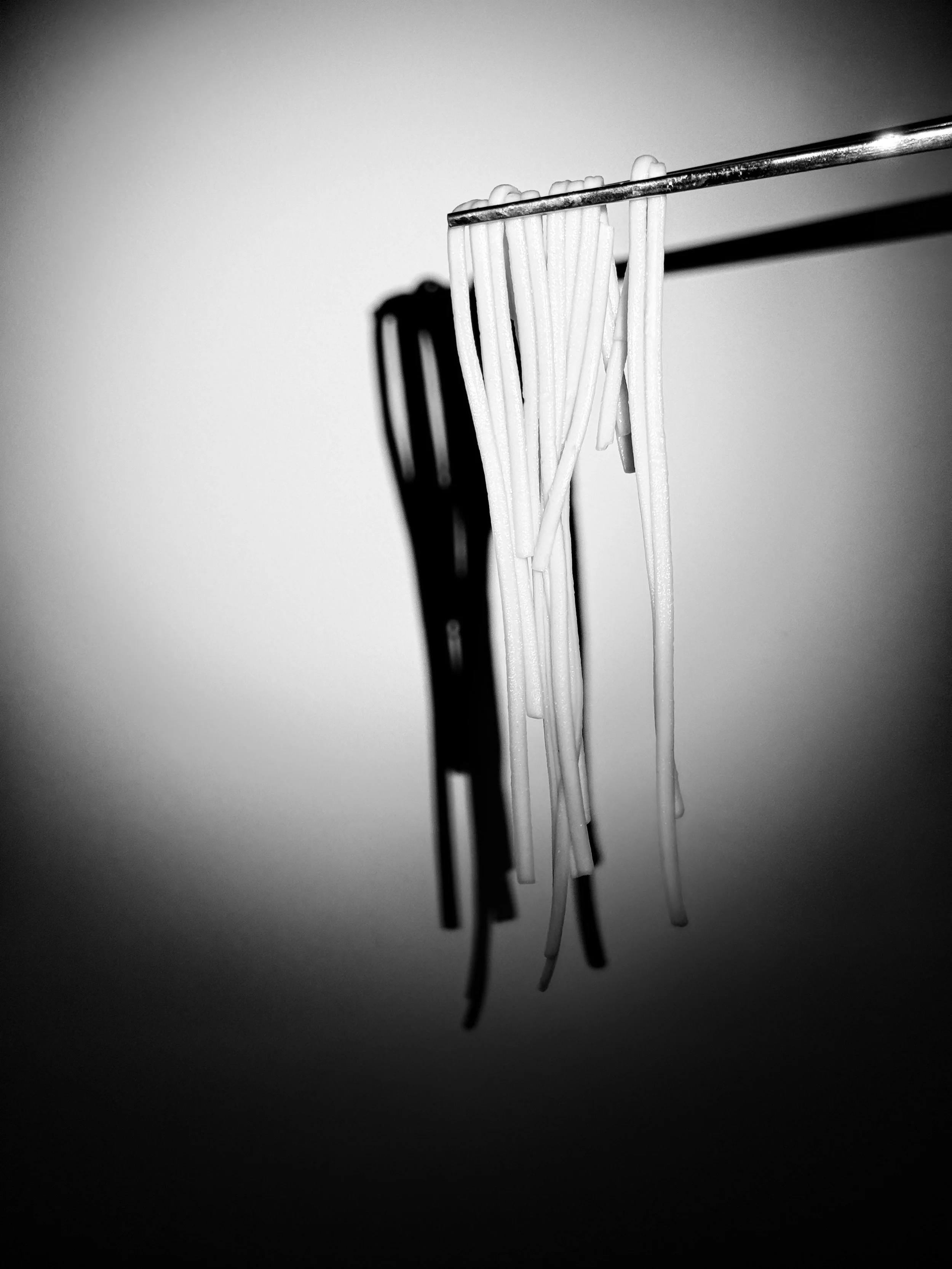
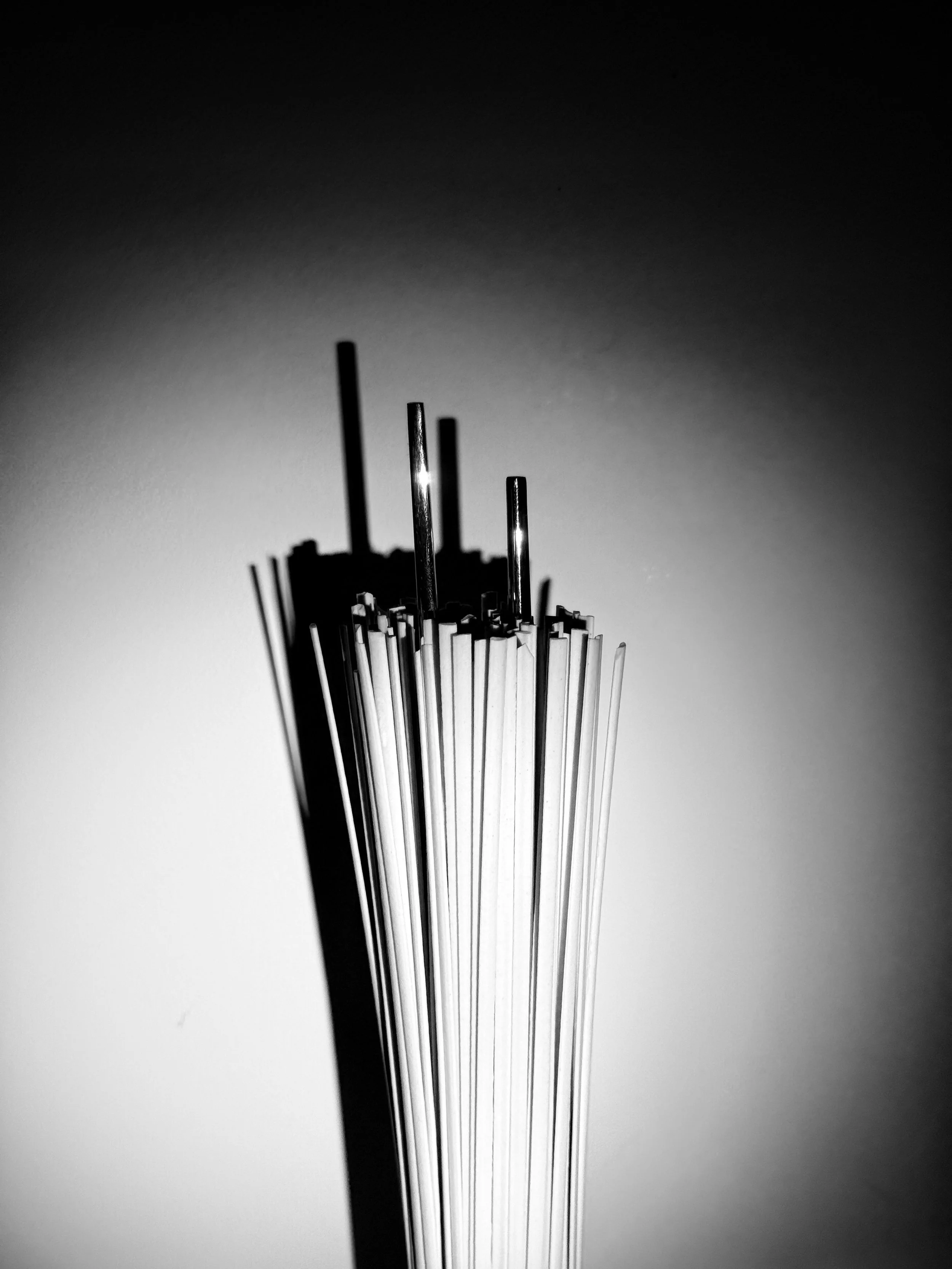
《筷》将金属筷子与煮熟的面条并置在一起。两种材料拥有相似的细长形态,却呈现出截然不同的物理状态:筷子坚硬、冰冷并反射光线,面条则在重力作用下弯曲、聚拢和垂落。它们之间的接触,使一个寻常的进食动作转化为一组被悬置的结构。
两幅照片分别从侧面与正面观察这一关系。在正面影像中,筷子、面条和投射出的阴影被压缩为密集的垂直形态。离开色彩与实际用途之后,熟悉的日常物品开始接近某种装置、建筑结构,或一组被固定在特定位置中的身体。
坚硬与柔软之间的关系暗示着力量的不均衡分配:一种材料决定位置,另一种材料则必须不断适应。然而,柔软在作品中并不等同于单纯的脆弱。面条在弯曲中维持自身,并聚合成新的结构。作品由此将适应视为一种持续的方法,同时也把它看作迫使适应发生的压力所留下的痕迹。
Statement
Chopstick brings together metal chopsticks and cooked noodles: materials that share an elongated form but behave in opposing ways. The chopsticks remain rigid, cold and reflective, while the noodles bend, gather and hang under gravity. Their contact transforms an ordinary act of eating into a suspended structure.
The photographs alternate between a lateral view of the hanging strands and a frontal composition in which chopsticks, noodles and shadows compress into a dense vertical cluster. Removed from colour and practical use, the familiar objects begin to resemble an apparatus, an architectural form or a group of bodies held in position.
The relationship between rigidity and flexibility suggests an unequal distribution of force. One material establishes the position; the other must continually adapt to it. Yet softness is not presented as simple weakness. The noodles bend without immediately breaking and gather into a structure of their own. The work considers adaptation as both a means of endurance and evidence of the pressure that makes adaptation necessary.